In just under a decade, iMotion has emerged as one of the most influential players in the global ADAS market. Its vision – Smart Mobility for Everyone – has become a commercial reality thanks to deep expertise in software-hardware integration, a commitment to engineering innovation and a collaborative ecosystem led by partners like Renesas.
The world’s largest telescope is unlocking the origins of the universe as Microgate adaptive optics reconciles light emitting particles with precision power conversion.
Even though it lagged some of the technologies we have used for many years, it could be said that artificial intelligence (AI) went mainstream in 2022 with the launch of ChatGPT. This fourth Avnet Insightsresearch report explores how far AI has penetrated both the electronic product design process and the functionality of end products.
Around eight out of 10 electronics engineers surveyed had products on the market today that feature AI (42%) or are working on incorporating AI into their product designs (40%). Respondents predicted the adoption of AI across a wide range of product applications, with process automation highlighted as a leading application opportunity for the technology. Regionally, China was seen to be leading with AI- enabled products already in the market (66%).
Perhaps surprisingly, there was not a dominant use of AI in the design process, but the technology does touch most stages of design and development from simulation to cross-technology integration. The use of AI in autonomous design and decision-making was ranked number one by a small margin of respondents, but responses were distributed across every stage of product development, with no one category garnering more than 9% of the responses.
In summary, AI is already pervasive both in the product design process and as a product feature. And many respondents believe we’re only seeing the tip of the iceberg.
Survey Methodology
This Avnet Insights survey was carried out online between Oct. 31 and Nov. 15, 2024, and it generated responses from 1,204 engineers across Asia (including Japan), EMEA, and the Americas. All major industry sectors were represented, with nearly half of respondents employed in Information Computing and Telecommunications (ICT). Approximately two-thirds of respondents indicated they have primary responsibility for their company’s product design; a quarter reported shared responsibility. In other words, the survey respondents were highly influential. Their job roles include software engineers (41%); electronics, hardware and mechanical engineers (31%); and engineering management (27%). Respondents were evenly spread between companies with revenues between $1 million and $10 million (15%) up to those with revenues between $501 million and $1 billion (18%). Approximately one-fifth of respondents work in businesses with revenues of more than $1 billion.
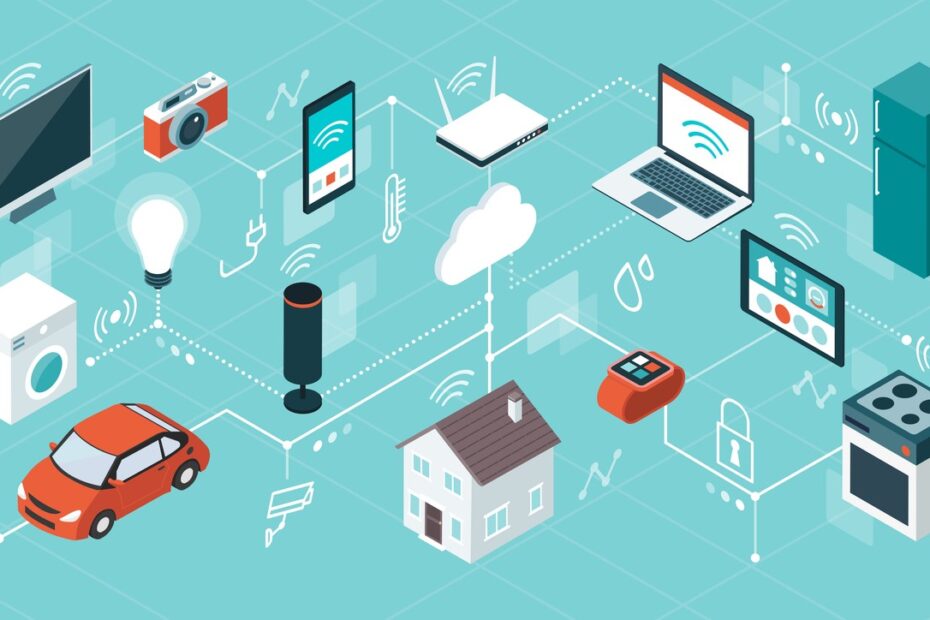
Working with the non-profit Habitat for Humanity, I’ve confirmed that smart home technology can transform affordable housing while promoting self-reliance and community development.
The global impact of the Internet of Things (IoT) is evident in its diverse applications across continents. It’s addressing rapid urbanization in the developing nations, tackling water scarcity and climate change, ensuring food safety and supply chain transparency, optimizing natural resource use in amid environmental concerns, and transforming healthcare.